
Various
Audiophile Analog Collection Vol.2
2xHD – 2XHDFT-V1167, (2023, Dec.)
Ratings:
Global Appreciation: 9.8
- Music: A-
- Recording + Mastering: 10
- Lacquer Cutting: 10
- Plating + Pressing: 9.8
- Packaging: standard gatefold
Category: medieval, renaissance, classical, blues, jazz, gypsy swing aka jazz manouche, nuevo tango, contemporary, worldbeat, easy listening, new age.
Format: Vinyl (2x200 gram LPs at 45 rpm).
Evaluated by Claude Lemaire
If you're a certain age, you might remember the waves of audiophile records coming ashore in the 1970s and 1980s flooding the hifi stores in order to demonstrate and hopefully sell their equipment. They were generally well recorded, some more than others, but let's admit it, more often than not, they were musically...ahhh how shall I phrase it.. boring! Being small independent labels meant they couldn't compete with the big guns who owned the top artists, and had to rely on studio musicians or older artists often past their prime–think Sheffield Lab, American Gramaphone, Opus 3, and Proprius anyone?


.jpg)

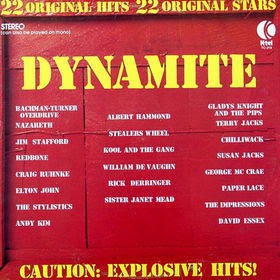
Those of us even older may recall the numerous K-Tel compilation LPs promoted on Tee Vee where contrary to the aforementioned audiophile records, featured great toe-tapping Top 40 hits but sounded really anemic in the bass, and were plain...CRAP!


Which brings me to talk about Fidelio Technologies' Audiophile Analog Collection Vol.2. Not only is this double-LP compilation outstanding in sound, it is also excellent musically and performance wise–surprisingly so perhaps, given the poor history of audiophile-oriented releases.

Comprising ten-tracks, totalling approximately 43 minutes, this latest "deluxe edition", cut at 45 rpm by Chris Bellman at Bernie Grundman Mastering, supersedes the original release of 2020 cut at 33 1/3 rpm by Matthew Lutthans at The Mastering Lab. This time, as an added bonus to the superior cutting speed, we get two extra tracks that were originally omitted.
Produced and engineered by René Laflamme, Audiophile Analog Collection Vol.2 is part of their ever-growing 2xHD pure analog catalogue.


Now, full disclosure, I've known René going way back to the 1990s when he was working as an audio consultant/salesman at a popular hifi boutique. He gave me a sealed copy of this present release where he was presenting his master tapes at the latest Audiofest 2024 held annually at L'Hotel Bonaventure in Montreal. That said, it was understood from the start that he was not to expect any automatic record review out of it.


And although I've evaluated two of his previous releases in the past–see http://soundevaluations.blogspot.com/2014/03/buzz-brass-melanie-barney-organ-holst.html as well as http://soundevaluations.blogspot.com/2016/12/june-in-fields_14.html –and found the former fantastic, I've also at times, felt underwhelmed with some of his earlier recordings and releases, so he knows it certainly is not a given what my impressions might turn out to be.
Those who've met him know that the soft-spoken show stalwart demonstrates a passion for perfection.

Enough so that not only is he the maestro behind Fidelio but also Nagra's North American Sales Manager. Possibly because of this, he is in a unique position to have access to top of the line recording gear such as Nagra's battery-powered IV-S portable tape recorder, which serves as his main 'reel-to-reel' session deck. Note that he has four of these for tape dubbing purposes.


Nagra's bulkier T-Audio, pictured on the album's front cover, serves as his preferred playback deck.


The latter is retro-fitted with a Doshi Audio Evolution tube head preamp replacing the Nagra's stock solid state circuitry. In addition, through the years, René has built up an enviable collection of many of the most sought-after microphones out there; including pairs of B&K, Neumann U67, Telefunken 251, AKG C12, and a single stereo Neumann SM69. That is in addition to his custom-designed Fidelio RL mics.


As if that were not enough to make you drool, he also possesses 5-band tubed, Pultec and DW Fearn point to point-wired EQs to sweeten his masters when need be. He's also assembled a reference room and playback system to better evaluate the sound quality level of original tapes and final recorded formats sold to the consumer.

The music selection on this compilation covers a wide range of periods and styles including from medieval, renaissance, classical, blues, jazz, gypsy swing aka jazz manouche, nuevo tango, contemporary, worldbeat, easy listening, and new age, as well as exploring different purist recording techniques in at least six different venues around Montreal, Québec. With their natural semi-reverberant acoustics, churches and chapels lend themselves good disciples for purest live recordings, as long as one masters the art of microphone placement, and finding the best ratio of 'direct' vs 'reflect', or if you prefer, intimate vs ambiant. Clearly this is the case here, where every track–though all quite different from one other–appears to strike the right ratio balance for that composition and performance.
I like that Chris Bellman not only left a good inch or so of 'dead wax' lead-out groove but that he also left a touch more lead-in groove–than typical cutting engineers do–before the actual music starts, providing the benefit of a quieter LP side intro, and more time to get to the couch. Throughout the album there is a welcomed warmth which conditions the ears and conscience to enter an inner calm. The timbre, dynamic range and soundstage are all very realistic.

Starting with the Marc Vallée Trio whose "Lights of Barcelona" opens our cultural and time travel. Don't be fooled by the new-agey worldbeat guitar-percussion vibe for it is the sole audiophile-style track before we switch gears and spice things up with the Trio de Curda. Reprising Astor Piazzolla's most famous work "Libertango", it reminded me to revisit my two Gotan Project albums.

Canadian jazz singer Doreen Smith renders a splendid bluesy take on the classic "Route 66" where she is perfectly captured front and center with zero trace of sibilance–a rare feat with many female singers smearing the words "sixty-six"–while the brass are perceived further back giving us a glance of the recording venue's size.


Soprano Monique Pagé accompanied by organist Régis Rousseau reflects a more sombre mood on the intro of "Seven Last Words of Christ". The tonal balance is spot on and truly full range; reaching way down to 16 Hz full level as produced by the Casavant organ's lowest pedal note, residing in Montreal's Église du Très Saint-Nom-de-Jésus.


You can feel the air resonating through the pipes. There is even "a note of caution to be very careful with the playback level...that can cause distress to your speakers if you're not careful". Thankfully my speakers could handle it, the only distress I felt was a very slight physical discomfort due to the impressive intensity of low frequency pressure, yet it didn't seem overblown. I am not exaggerating, if you have the appropriate audio gear, you will be impressed by the power of the bass cut in those record grooves. This makes for a great challenging demo-track to evaluate systems, in particular cartridge tracking, woofer enclosures, subwoofers, and room resonances. What is also impressive and as important but rarely heard is the articulation of this powerful full scale bass. Often times you'll get some bass heavy track featured on an album that ends up sounding muddled because there is insufficient top end overtones and air to counterbalance the weight and maintain fine note definition. I must admit that among my vast vinyl collection, I have never heard a better (low) bass articulation coupled with such natural air ambiance than on this record!


At the other end of the spectrum, there is a delicacy to the treble; that again is breathy, refined, and divine. The Swingaro trio honors Horace Silver's "Song for My Father"–a Blue Note favorite–featured here in manouche-style, highlighting the agile pluck of the strings.


Finally, on the intro of "Échanges Synaptiques Interdits", double bassist Frédéric Alarie joins Eric Chappell on the OSM's rare octobass which as the name implies plays one full octave lower than a doublebass; so open E0 is 20.6 Hz instead of open E1 at 41.2 Hz respectively. First built around 1850, it measures an impressive 11.5 feet, and the OSM is privileged to be the only orchestra to own one!


René sourced the "2xHD mastering" from his original analog session tapes before assembling the new all-analog compilation master tape, and sending the latter to the States.

Once the lacquers were cut at Bernie Grundman Mastering in Hollywood, California, they were sent to Symcon Inc. in North Carolina for the normal 3-step plating procedure before sending the stampers back here to the Le Vinylist pressing plant in Québec City.

Being the 'new kid on the block' in the vinyl manufacturing business has the advantage of benefiting from the latest improvements in record presses, such as maintaining a higher and more constant temperature with automation, yielding a lower noise floor and more uniform vinyl sound throughout the typical press run of 1000 records or so per stamper. I was told that Fidelio limits the run to 500 records per stamper. I can confirm that all four sides of my copy were near-perfect, meaning shiny, flat, well centered, and very silent, to the extent that you could perceive better the tape's natural low level hiss when the music was in the ppp dynamic markings. The only visual bemol was some surface swirlings strictly on side A that did not in any event affect playback quality, and which I'm speculating was from the stamper or some silvering residue perhaps. The LPs are well protected by the anti-static black poly-paper inner sleeves giving them a more elegant look than the standard plain white.
Like the rest of the Fidelio catalogue, the cover presentation is mostly monochrome printed on non-laminated standard stock cardboard with the tracks and credits listed on the back.

Inside the gatefold we get nine nice B&W session photos of the musicians and recording gear on location. In addition a full-size folded pamphlet provides additional info on the selections plus a photo of the 2xHD Mastering Lab reference equipment. René told me they're looking with their Québec-based suppliers and printers into improving the jacket's visual aspects in the near future.
In conclusion, you may have guessed by now that I am generally not a big fan of "audiophile records" nor of "Best of" or "compilation" albums whatever the genre, but in this instance I must admit, it makes perfect sense, and is in fact an amazing assemblage of Québec's finest talent presented to its highest level of refinement. It is not surprising therefore that throughout the years, Fidelio releases have won worldwide, numerous Best sound awards. Unofficially I also must now bestow my own Best sound award for a demo-worthy compilation album. Kudos in spades!
Musicians:
Marc Vallée Trio – guitar, percussion
Trio de Curda – cello, accordian, double bass
Doreen Smith – vocals
Régis Rousseau – organ
Monique Pagé – soprano vocals
Swingaro – guitar, cello, double bass
Les Jongleurs de la Mandragore – oud, harmonium, cittern, flute, soprano vocals, percussion
Anonymous tenor and harpsichord players – harpsichord
Frédéric Alarie – double bass
Eric Chappell – double bass, octobass
Sylvain Provost – acoustic guitar
Musicus Percussion Ensemble – percussion
Additional credits:
All tracks recorded by René Laflamme except #D-3 recorded by Jean de la Durantaye
2xHD mastering – René Laflamme
Cutting engineer – Chris Bellman at Bernie Grundman Mastering
Plating at Symcon Inc., North Carolina
Pressed at Le Vinylist, Québec
Album cover artwork – André Perry
Graphics – Sylvie Labelle
------------------------------------------------------------------------------------------------------------------


